CBD for anxiety

What many still do not know: CBD also helps against anxiety. Fear is essential to survival. It protects our body in dangerous situations. However, if it occurs constantly, forming a backdrop of anxiety, we speak of an anxiety disorder. Panic, shortness of breath, and even chest pain can be the result. Anxiety, panic attacks, and depression severely impair general well-being. Medications can help, but they often have serious side effects. Cannabidiol (CBD) is a herbal alternative. This hemp extract can support the body's reaction to anxiety disorders, panic attacks, and even depression.

In recent years, we have dedicated ourselves to developing a proprietary strain tuned to fend off anxiety disorders, stress, and panic attacks.

Enectaliana® is the first cannabis strain in Europe dedicated to CBD oil extraction. It contains CBD as well as other cannabinoids and terpenes selected to counter anxiety.

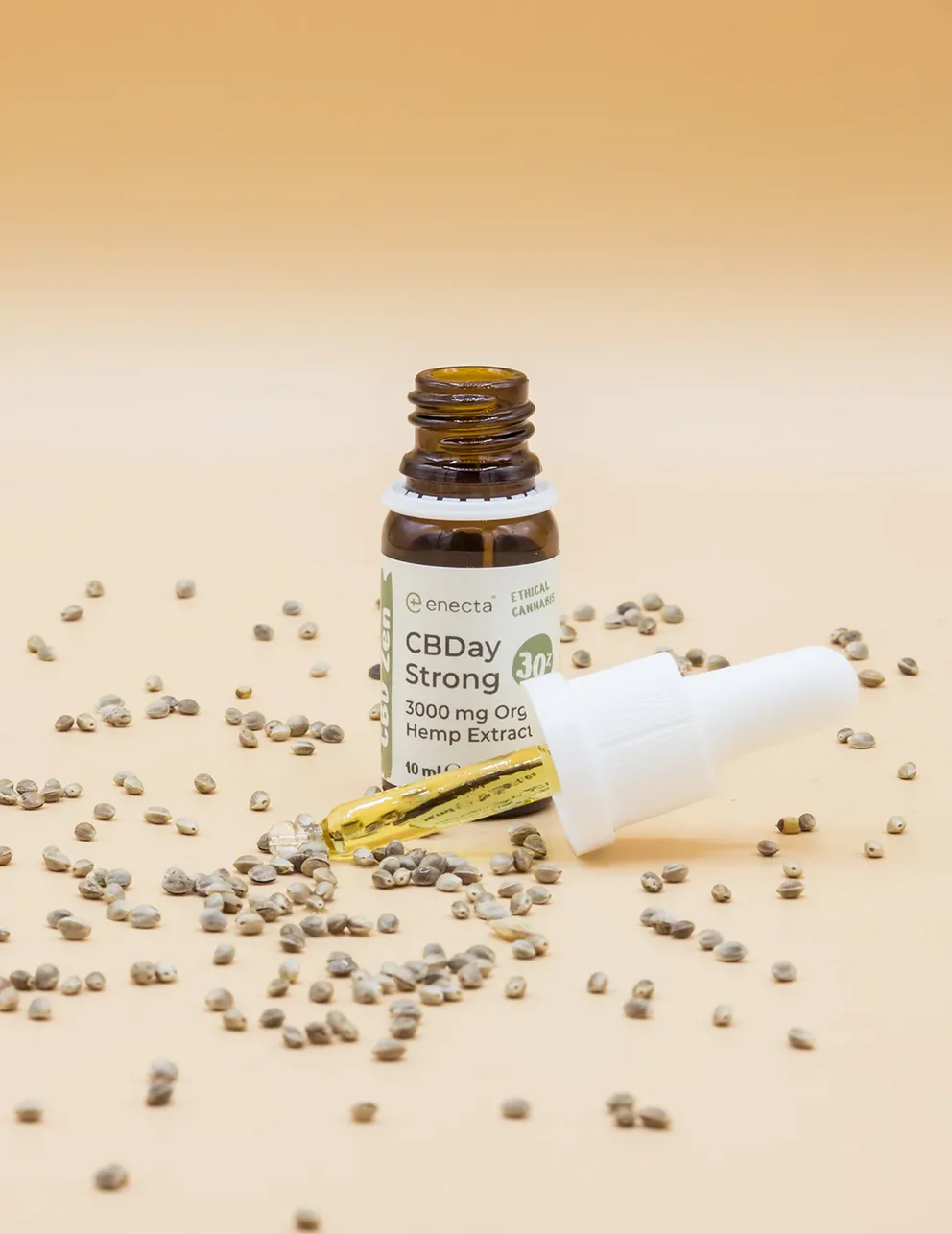
Thanks to Enectaliana®, in addition to the Premium Hemp line, we now offer the CBDay Plus line - our natural remedies for anxiety.

What is anxiety? - Definition

Anxiety is a natural reaction to stressful and dangerous situations. For evolutionary causes, fear and anxiety are deeply anchored in human beings and essential for survival. If we had no fear, we would long since be gone. Fear and anxiety originate in our minds and manifest themselves with various symptoms.

However, health professionals speak of anxiety disorders if these emotions go beyond a "healthy" and natural level. In these cases, the individuals concerned experience anxiety, although the situation wouldn't seem to require it.

Anxiety disorders can be divided as follows:

Generalized anxiety disorder:

Patients experience constant feelings of anxiety for no apparent reason, which severely impair daily functioning and quality of life. They are nervous, distracted, and have to deal with hot flashes, pain (e.g., tension headaches), and insomnia.

Social phobia:

People with social phobia have trouble engaging in social interactions. Even a simple conversation with an unknown person causes great anxiety that can culminate in panic attacks. The interaction with an audience, for example, during a business presentation, is also a seemingly insurmountable challenge.

Panic Disorder:

This disorder is characterized by extreme and overwhelming feelings of anxiety that occur suddenly and often end with a panic attack, which can result in shortness of breath, chest pain, sweating, nausea, and other very unpleasant symptoms. Post-traumatic stress disorder (PTSD) is a delayed psychological response to a traumatic event and is often associated with anxiety and panic.

In addition, various other anxiety disorders severely affect psychological well-being. The OECD estimates that anxiety disorders affect around 25 million people across the EU. Affected individuals often find it difficult to talk about it and wait too long to see a doctor. Conventional medical treatment and the use of CBD as a natural supplement are not mutually exclusive in most cases.

Causes of anxiety

Currently, there is no generally accepted explanation for the development of anxiety disorders. However, the theories developed so far are generally based on the so-called stress-vulnerability model. Roughly speaking, this model proposes that anxiety disorders are caused by specific risk factors, which external influences further amplify.

These are based on the idea that anxiety disorders are caused by the interaction of physical, psychological, and social factors, which fall into 3 categories:

1. Causative factors

These include genetic predisposition (people whose family members suffer from anxiety disorders are at higher risk), personality, and upbringing.

2. Trigger factors

This category includes traumatic experiences, acute stress (which increases the production of stress hormones like cortisol or epinephrine), physical conditions, or the use use of drugs and specific medications.

3. Maintaining factors

Some examples are social factors (difficult family relationships, a divorce, but also anxiety-inducing media), repressed emotions, or the reluctance to face or talk about one's anxiety.

Anxiety symptoms

CBD can help with a variety of anxiety disorders. The most common symptoms of an anxiety disorder include:

  • Increased stress and the inability to relax
  • Actual or perceived shortness of breath
  • Sweating (especially cold sweat)
  • Panic attacks
  • Accelerated metabolism
  • Decreased blood flow to the sexual organs
  • Digestive conditions

According to the World Health Organization (WHO), anxiety and depression are worldwide on the rise. Both are accompanied by severe impairments in everyday life: lack of concentration, palpitations, dizziness, the inability to sleep well, and sweating. f left untreated, these conditions leave affected individuals with a substantially diminished quality of life.

However, there is a herb to combat the symptoms of anxiety and depression: more than 2,000 years ago, people discovered that the hemp plant could have a calming effect on the human body. Today's research picks up on this knowledge and confirms that CBD can help against anxiety, panic disorders, and depression. Use enecta's premium CBD oil for anxiety and depression.

How to diagnose anxiety

Individuals with anxiety disorders usually consult their family doctor, who begins the diagnosis by taking the patient's medical history. Here it is crucial to determine the anxiety's type and severity. Determining as accurately as possible when the symptoms started manifesting is also essential.

In order to diagnose an anxiety disorder, a health professional must first rule out possible physical causes (e.g., a cardiovascular disorder or a lung disease). If, after thorough checks, there is no evidence of a physical cause, a psychiatrist or psychotherapist should take over the case. For particularly severe or long-lasting anxiety disorders, inpatient treatment is often recommended.

CBD for anxiety

How CBD helps against anxiety disorders and panic attacks:

Interaction with the endocannabinoid system:

Humans have an endogenous endocannabinoid system (ECS). As part of the nervous system, it has an impact on many biological processes. If it gets out of balance, there can be serious consequences. CBD interacts with the ESC system stimulating the cannabinoid receptors CB-1 and CB-2. These receptors are distributed throughout the body and particularly in the brain. Stimulating them - mainly the CB1 receptors in the brain - CBD can provide calm and relaxation.

The impact of CBD on anxiety disorders is due to three mechanisms of action:

1. CB-1 receptors: CBD can inhibit the uptake and breakdown of the endogenous cannabinoid anandamide by interacting with the CB-1 receptors. As a result, anandamide activation is more intense, and the body can utilize it longer. This, in turn, can contribute to reducing anxiety.

2. Vanilloid receptors and glycine receptors: CBD's interaction with vanilloid receptors 1 and 2 is thought to have an analgesic effect. The stimulation of glycine receptors is believed to reduce chronic pain stimuli. Increased adenosine signaling is thought to promote the widening of blood vessels, thus lowering blood pressure.

3. 5-HT1A receptors: Conventional antidepressants also rely on stimulation of the 5-HT1A receptors. These are found primarily in the spinal cord and brain and have an impact on memory, body temperature, and many other essential processes. CBD binds with this receptor and is said to influence serotonin levels, thus reducing anxiety.

Benefits of CBD for anxiety

Anxiety disorders are often treated with tranquilizers and anti-anxiety medications, which frequently have severe side effects. They promise quick relief but are not intended for permanent use because they can lead to dependence.

Therefore, it is advisable to take them only for a short period of time or when anxiety or panic are particularly intense. Those who deal with discomfort or latent anxiety on a daily basis will find only a few effective remedies that can be taken permanently.

CBD is - by now also for conventional medicine - a ray of hope!

CBD-oil-30
CBD-oil-30

Testimonials and studies on CBD for anxiety

Scientifically confirmed: CBD can help with anxiety and panic - akin to antidepressants. In 2015, the journal Neurotherapeutics published a review of numerous studies exploring CBD's potential to manage anxiety. The results demonstrated that CBD can be effective for both anxiety and panic attacks. The review examined 49 preclinical, clinical, and epidemiological studies, part of which involved technologies that allow to study the brain's metabolism.

But CBD can also reduce anxiety caused by post-traumatic stress disorder or obsessive-compulsive disorder. This was shown in a study conducted at the New York School of Medicine by Esther M. Blessing, Maria M. Steenkamp, Jorge Manzanares, and Charles R. Marmar.

More positive evidence comes from a study conducted by the University of Washington in 2018. Researchers examined the effectiveness of cannabis in treating stress and anxiety in more than 1,400 affected individuals. The result: 58 percent of participants experienced significant relief after taking cannabis. The study also recorded the type and amount of cannabis consumed as well as the effects it had. The subjects reported that cannabis high in CBD and low in THC proved to be the most effective in relieving anxiety. The complete results were published in the Journal of Affective Disorders.