CBD Crystals

Those who buy CBD crystals often use them to create their own products. CBD crystals are also called isolates and have a wide range of applications. The extraction process ensures that only 100% pure CBD remains while all other cannabinoids and terpenes are filtered out.

Therefore, you can be sure they are absolutely free of THC. CBD crystals are the purest form of CBD. Unlike other products, crystals usually have a CBD content of at least 98%. They look like fine, white powder and are visually comparable to icing sugar or baking powder. Since this CBD extract does not contain THC, it is legal in all EU countries.

1 products


What should I look for when buying CBD crystals?

When selecting CBD crystals, purity stands as a paramount consideration. High-quality products should contain at least 99% CBD, with minimal traces of other compounds. Third-party laboratory testing verifies this purity, ensuring the absence of contaminants such as pesticides, heavy metals, or residual solvents [Bonn-Miller].

Source and Extraction Methods

The origin of hemp used in CBD crystal production significantly impacts quality. Organic, non-GMO hemp cultivated in regions with strict agricultural regulations often yields superior products. Extraction methods also play a crucial role, with CO2 extraction generally considered the gold standard for producing pure CBD crystals without harmful residues [Citti].

Transparency in manufacturing processes and readily available certificates of analysis (COAs) indicate a company's commitment to quality. These documents should detail not only CBD content but also the presence or absence of other cannabinoids, terpenes, and potential contaminants [Pavlovic].

Packaging and Storage

Proper packaging protects CBD crystals from degradation caused by light, heat, and air exposure. Airtight, opaque containers preserve potency and extend shelf life. Some manufacturers, like Enecta, utilize advanced packaging techniques to ensure product stability from production to consumption.

Price considerations should be balanced with quality assurance. While CBD crystals represent a concentrated form of CBD, excessively low prices may indicate subpar quality or purity. Conversely, the highest price does not always guarantee the best product. Comparing COAs, extraction methods, and customer reviews can help identify reputable products that offer value without compromising quality [Corroon].

What are CBD crystals made from?

CBD crystals originate from industrial hemp plants, specifically cultivated varieties of Cannabis sativa L. with low THC content. These plants are selectively bred to maximize CBD production while maintaining THC levels below the legal threshold of 0.3%. The genetic profile of these hemp strains significantly influences the final composition of CBD crystals [Small].

Cannabinoid Biosynthesis

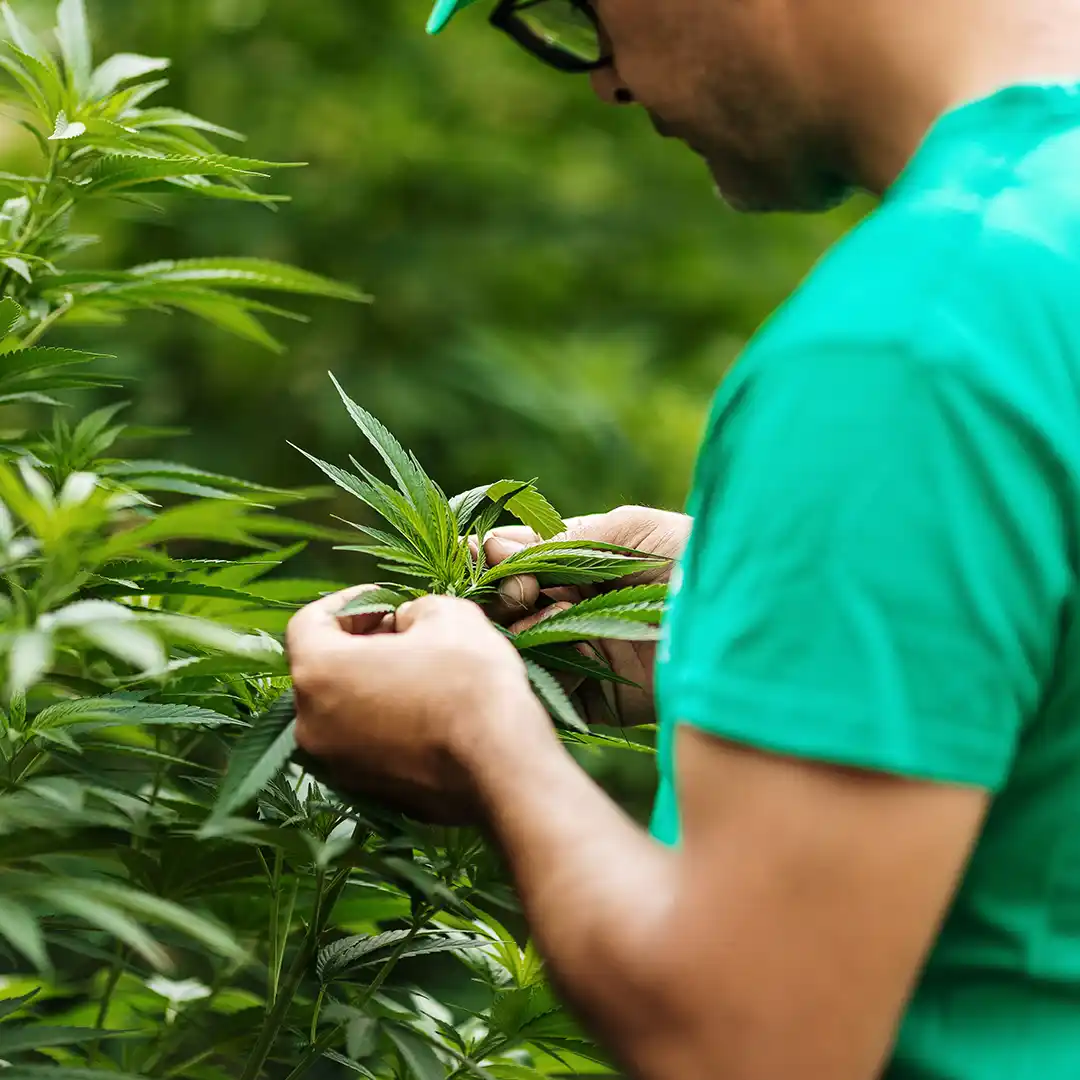
Within hemp plants, CBD exists primarily in its acidic form, cannabidiolic acid (CBDA). This precursor undergoes decarboxylation, a process involving heat or prolonged storage, to convert into CBD. The plant's trichomes, tiny glandular structures on flowers and leaves, are responsible for cannabinoid production [Appendino].

Environmental factors such as soil composition, climate, and cultivation practices impact the cannabinoid profile of hemp plants. Optimal growing conditions and careful harvesting techniques ensure maximum CBD yield and minimal contamination. Some producers, including Enecta, emphasize organic cultivation methods to enhance the purity of their source material [Russo].

Extraction and Purification

The journey from plant to crystal involves sophisticated extraction and purification processes. Initially, crude CBD extract is obtained from hemp biomass using methods like CO2 extraction or ethanol washing. This raw extract undergoes winterization to remove plant waxes and lipids, followed by distillation to increase CBD concentration [Citti].

The final crystallization step involves dissolving the distillate in a non-polar solvent and carefully controlling temperature and pressure. As the solution cools, pure CBD molecules form crystalline structures, separating from any remaining impurities. Multiple recrystallization cycles may be employed to achieve the highest possible purity, often exceeding 99% [Pavlovic].

How to determine CBD crystals quality

Assessing CBD crystal quality involves a multifaceted approach, beginning with visual inspection. High-quality crystals typically exhibit a uniform, crystalline structure with a white or slightly off-white appearance. Discoloration or inconsistent textures may indicate impurities or degradation [Pavlovic].

Chemical Analysis

Comprehensive third-party laboratory testing provides crucial insights into CBD crystal composition. Gas chromatography and high-performance liquid chromatography are commonly employed to quantify CBD content and detect the presence of other cannabinoids. Mass spectrometry techniques can identify trace contaminants, including pesticides, heavy metals, and residual solvents [Citti].

Terpene profiles, while minimal in pure crystals, can be analyzed to verify the absence of these aromatic compounds. Some manufacturers, like Enecta, provide detailed certificates of analysis that include terpene data, offering a complete picture of product composition.

Solubility and Melting Point

The solubility characteristics of CBD crystals serve as quality indicators. Pure CBD readily dissolves in lipids and certain organic solvents, with any insoluble particles suggesting impurities. The melting point of CBD crystals, typically around 66°C (150.8°F), can be used to assess purity, as deviations may indicate the presence of other substances [Mechoulam].

Stability testing evaluates how CBD crystals maintain their integrity over time under various environmental conditions. Quality products should demonstrate minimal degradation when exposed to light, heat, and humidity. Accelerated stability studies provide insights into long-term product performance, ensuring that CBD crystals maintain their potency and purity throughout their shelf life [Pavlovic].

Questions and answers about CBD Crystals

There are no consistent study results on the combined intake of CBD and CBG. However, the first scientific findings indicate that a combined intake is in no way dangerous.

On the contrary: users report that they feel the pure power of the hemp plant when
taking them together. We do not know of any serious side effects.

Nevertheless, we would like to exercise caution and recommend the combination of CBD and CBG only if you have experience with both cannabinoids. The so-called
entourage effect is certainly not dangerous. Nevertheless, it would be best if you first got to know the products separately.

There are different ways to take CBD crystals. By far, the most popular variant is oral administration. Most users are already familiar with CBD hemp oils and know the sublingual administration well.

Just as with hemp oil, you place the powder under the tongue. The powder dissolves after 30 to 60 seconds, and the CBD enters the bloodstream.

In addition to sublingual administration, there are other options to enjoy CBD crystals:

  • Smoke or vaporize CBD crystals with a vaporizer
  • Dilute CBD crystals in oil and use it to create different products
  • Add CBD crystals to food
  • Apply them topically using a cream and take care of the skin

There are not enough scientific findings to make a precise statement. Fact is: The effect of CBD depends strongly on individual factors such as weight, tolerance, and age. Every person tolerates CBD differently.

However, a CBD overdose can be ruled out. If you always want to be on the safe side, you should slowly approach the optimal dosage. Over time, you can gradually increase the daily dose.

Once CBD crystals enter the bloodstream, they interact with the body's CB2 receptors. This interaction doesn't get you high. The well-known THC interacts with CB1 receptors, which are located in the brain. For this reason, THC has a psychoactive effect and triggers the well-known state of intoxication.

This is explicitly not the case with CBD. Even the intake of extremely high amounts of CBD or CBG does not trigger any change in consciousness or perception. It does not matter in which form you consume CBD.

CBD crystals are legal in many countries and this is absolutely logical: cannabidiol does not have an intoxicating effect, does not cause dependence, and has hardly any side effects.

However, there are three points that need to be considered when buying and selling CBD products:

  • They have to contain less than 0.2 % (in certain countries 0,3%) THC
  • They can’t be labeled as medicines or food
  • Whoever acquires them must be of age

Unlike CBD oil, CBD crystals have a very long shelf life. If you store CBD crystals in a dry and dark place, they are still edible even after years. CBD crystals do not lose their effect even after a long storage period.

The story is different with CBD bud and hemp oil. On the one hand, both products lose their effect after a certain time. On the other hand, they could go mouldy if you don't store them properly. CBD hemp oil should be stored in a dry and cool place and ideally consumed within 3 months after opening.